For the last eighteen months, the AI community has been obsessed with the 'agentic' shift. We have moved past simple RAG pipelines and basic chat interfaces into a world where we expect models to actually do things—write code, execute bash commands, and manage multi-step workflows. But for those of us in the trenches building these systems for enterprise clients, the reality has been messy. We have been duct-taping together custom Docker containers, writing fragile observation loops, and praying that a model doesn't decide to recursively delete a directory because of a misinterpreted prompt. OpenAI’s latest update to its Agents SDK, specifically the introduction of sandboxing and standardized harnesses, is the signal that the era of the 'toy' agent is officially over.
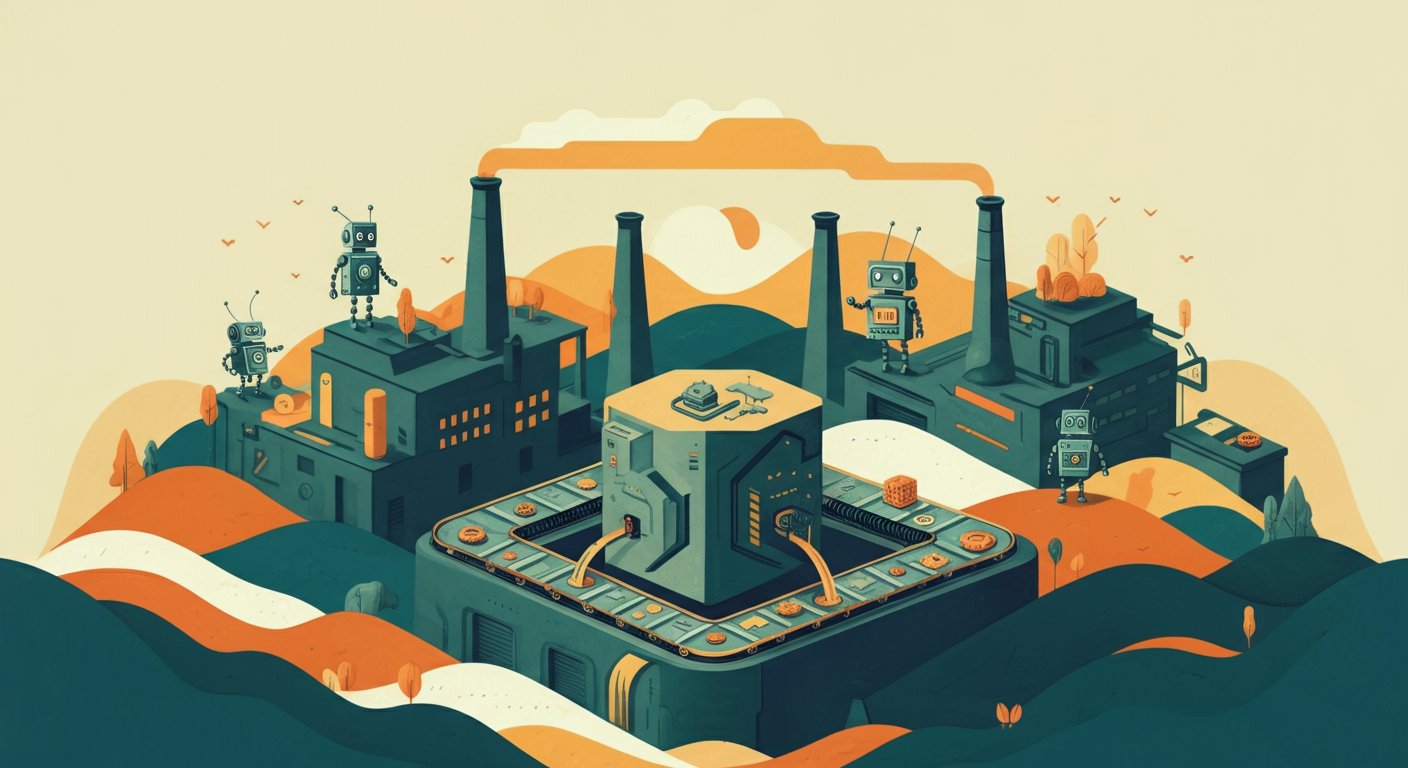
The most critical piece of this update is the sandboxing capability. In a production environment, giving an LLM access to a file system or a runtime is a massive security liability. Until now, developers had to architect their own isolation layers to ensure that an agent’s 'thought process' didn't result in a catastrophic system failure. By integrating sandboxing directly into the SDK, OpenAI is acknowledging that safety isn't just about what the model says, but what the model does. This allows for a controlled execution environment where an agent can iterate on code or manipulate data in a silo. For builders, this means we can finally stop worrying about the 'blast radius' of a hallucinated command and start focusing on the actual logic of the task at hand.
Then there is the concept of the 'in-distribution harness.' In the world of agentic engineering, the harness is the scaffolding that connects the frontier model to the real world. It handles the tool-calling logic, the state management, and the interface between the model’s output and the system’s input. By providing a standardized harness, OpenAI is effectively trying to create a common language for agentic behavior. This is a strategic move to reduce the friction of deployment. If every enterprise is building their own custom orchestration layer, the ecosystem remains fragmented and difficult to scale. A standardized harness allows for better observability and more predictable performance across different use cases, from automated DevOps to complex financial analysis.
We also need to talk about 'long-horizon' tasks. This is the holy grail of agentic AI—the ability for a model to maintain a coherent goal over dozens or even hundreds of individual steps without drifting off course. The technical challenge here isn't just the model’s context window; it’s the compounding error rate. In a multi-step workflow, a 5% error rate at step one becomes a 50% failure probability by step ten. OpenAI’s focus on making the SDK compatible with various sandbox providers and improving the harness is a direct attack on this reliability gap. They are providing the infrastructure necessary to manage state and recover from errors, which is the only way we will ever see agents handling truly complex, autonomous projects.
However, there is a clear trade-off here that builders must recognize: vendor lock-in. By adopting OpenAI’s specific SDK and harness architecture, you are tying your agentic logic closely to their ecosystem. While the SDK is currently Python-focused with TypeScript on the horizon, the underlying philosophy is designed to optimize for OpenAI’s frontier models. As an engineer, you have to weigh the speed and safety of this 'out-of-the-box' solution against the flexibility of open-source frameworks like LangGraph or CrewAI. My take? For enterprise applications where security and 'time-to-value' are the primary metrics, the trade-off is worth it. The complexity of building a secure, reliable agent from scratch is simply too high for most teams to justify.
Ultimately, this update is about professionalizing the field. We are moving away from 'prompt engineering' as a primary lever and toward 'agentic architecture.' The focus is shifting to how we constrain, monitor, and empower these models within a defined workspace. If you are still building agents by just piping strings into an API and hoping for the best, you are already behind. The future of the industry is in these hardened, sandboxed, and standardized environments. OpenAI has just handed us the blueprint for how to build them at scale.